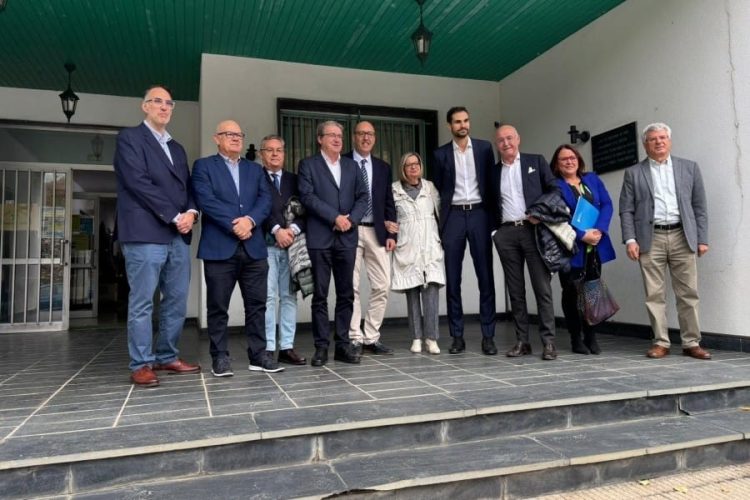

Their smiles greet me. They know I’ve come to learn about their working lives—stories they are proud of. It has been a life of struggle and constant work, and telling it, despite the initial nerves, is always very satisfying. It is something like a reward for the perseverance of those who paved the way in a world that, even today, still has “a little bit left to overcome.”
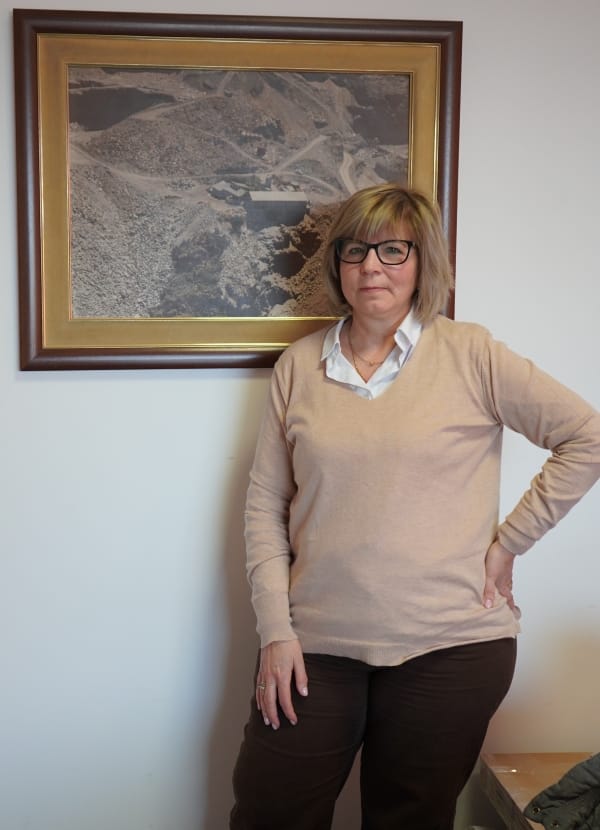
Ángeles Prada Núñez has been an administrative technician for 38 years—currently also Head of Human Resources—at the Valdeorras slate company Vazfer. She sums up that time, curiously, through the three most important milestones of her personal life: “I was single when I arrived, and now I already have two grown-up daughters.” A few minutes into the conversation, she highlights what has always been the company’s greatest value for her: “I’ve never had problems balancing work and family life.”
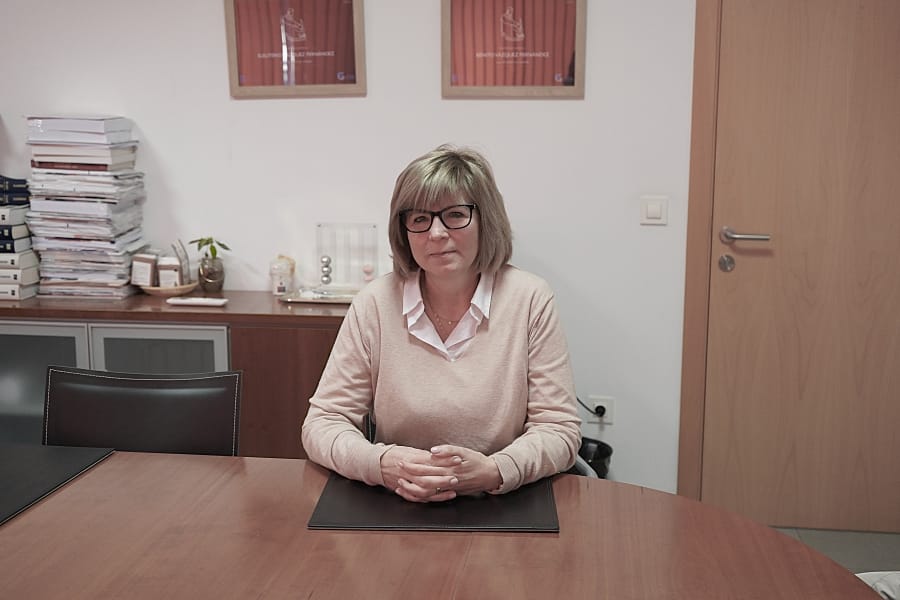
Ángeles’s long-standing role and her ability to analyse and empathise with people make it easier for someone unfamiliar with the sector to understand it from the inside and see its evolution. She describes it from a position of remarkable experience, examining every step taken in the incorporation of women into a world initially reserved for—and identified with—the male gender.
“From when I started to now, it’s a huge gap; technology has transformed the work and eliminated the differences between men and women, because nowadays a woman can carry out the same tasks as a man.” In fact, she explains, “an example is our warehouse supervisor, a highly trained person who is a true professional in the job she does at this company.”
Noelia Pérez Casas is a warehouse supervisor at Vazfer, and she too has paved the way. Her lively gaze and the way she moves give her away: we are looking at a self-made person, for whom life has not been easy and who is where she is today because, as she says herself, “I’ve earned it.” Organising work in a warehouse requires both knowledge and determination “in equal measure,” a desire to improve “and to learn how the overhead crane, the forklift, or that new machine I don’t yet understand works.”
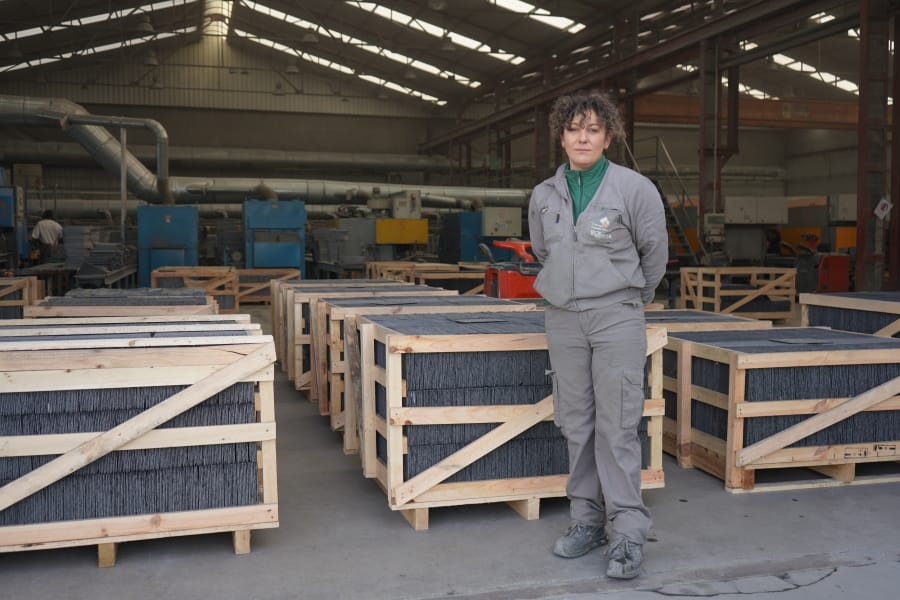
The first company in the sector where Noelia worked took a strong interest in her continuing her education. Her expression softens as she recalls that when she arrived in the slate industry, “she was very young, and they strongly encouraged her to keep studying.” This even allowed her to work for years in other occupations, without ever fully leaving behind her passion for slate, to which she returned years later “with even more enthusiasm.” By then, things had changed so much that “associating warehouse and quarry work with brute strength exercised only by men had become a meaningless cliché, because today the work can be done equally by a man or a woman.”
Despite the initial difficulties typical of earlier times, both women encourage new generations of women to enter the slate sector, “where people earn a salary with good working conditions, even better than in other sectors that require higher qualifications.”
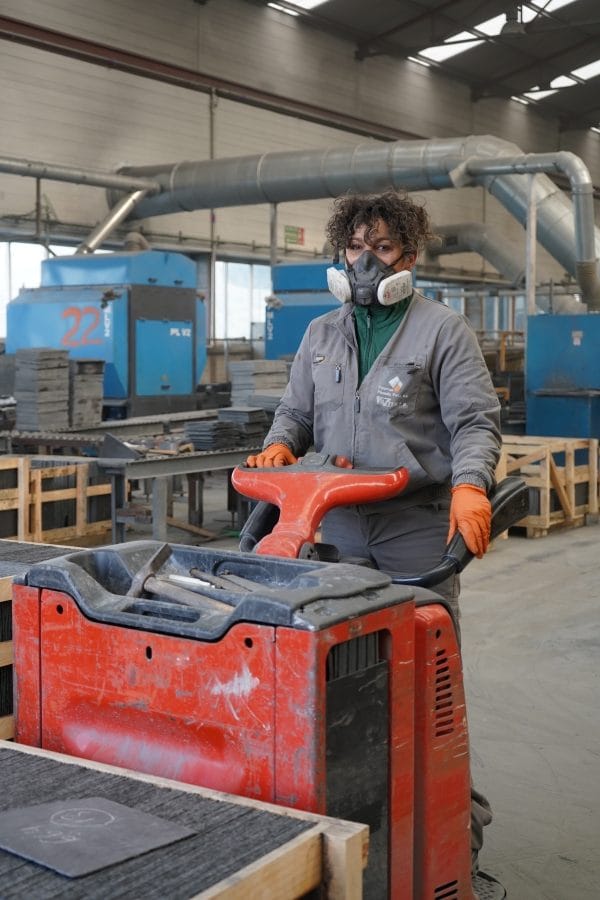
Her determination sometimes led Noelia to demand “that I be placed where I deserved” and later “that I be given the pay grade that corresponded to me,” something that, she explains, many of her male colleagues never had to demand. Her struggle, like that of other women who paved the way, has made it so that today “things are completely different,” even though, as Ángeles says, “that little bit that’s still missing” has not yet been fully resolved as a society—and remains something we must continue to work on “as we always have.”